
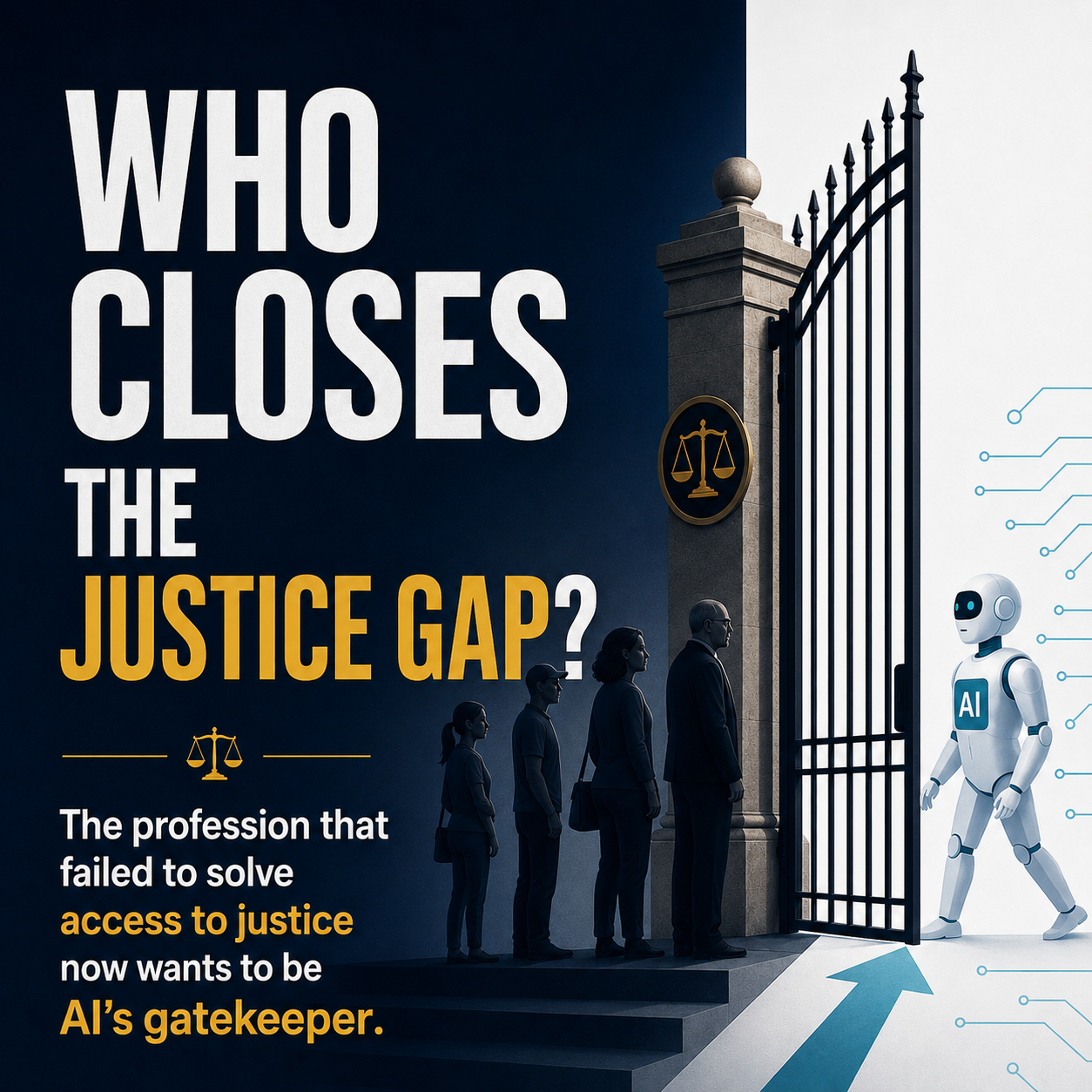
The New York legislature–pressured by the organized bar–is on the verge of enacting restrictions that will make it difficult to use AI to close the access-to-justice gap. Even worse, this is merely one of many similar efforts elsewhere, some statutory and some regulatory.
It’s pretty ugly, since multiple studies have shown a continuing unmet need for legal help, with some estimates as high as 74% of the public needing legal services, mostly because they can’t afford them.
We built an entire regulatory apparatus around the premise that only lawyers can be trusted to deliver legal services. We didn’t deliver them. Now too many lawyers are trying to restrict the use of technology that might actually close that gap.
Something is wrong with this picture.
Cat Moon‘s recent LinkedIn post asked the question that should be keeping bar associations up at night — and isn’t:
The legal profession has failed for decades (forever?) to deliver legal services to most people in the US. Under monopoly conditions. This is fact. Supported by data. So, why is our profession the relevant decision-maker about how AI serves the people it failed?