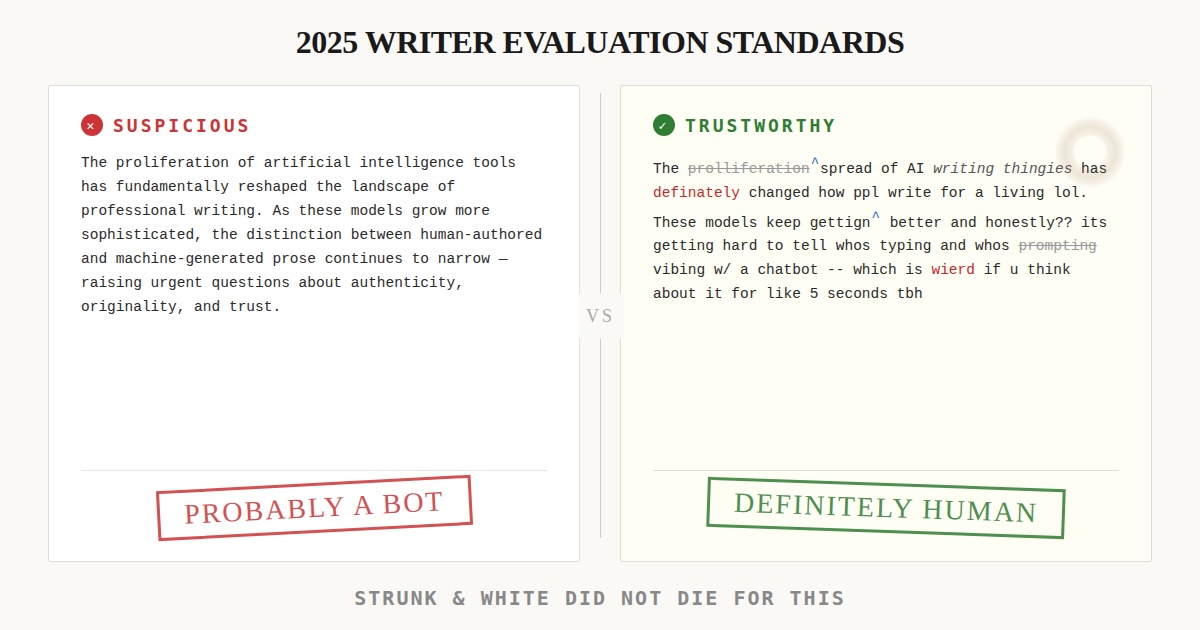
- They’re scattering typos like breadcrumbs.
- Swapping em dashes for double hyphens.
- Stuffing in obscure sitcom quotes.
- Saying things

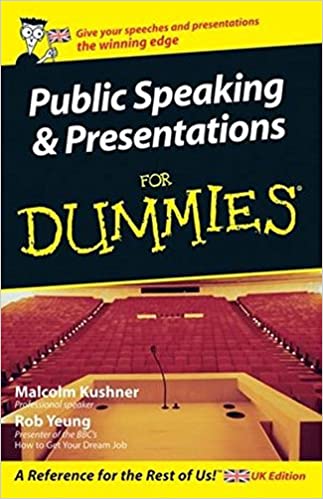
Has the Internet made books obsolete? Not so far as I’m concerned. I have 20+ titles in my personal library of books about presentations—and I’ve even read most of them. If I could keep only three, my choices would be:
Since the publication

She begged “Do not do that,” then “STOP OPENCLAW.” Neither worked.
That’s what happened to Summer Yue, Meta’s Director of Alignment at their superintelligence safety lab. By the time she reached her desktop to kill the process manually, the AI agent she’d created had already deleted hundreds of emails. You would expect someone with

Every year brings a new legal-technology miracle. In 2026, the most aggressively promoted one may be “AI for discovery.” If you have attended even a single conference lately, you have heard the pitch. AI will slash review costs. AI will eliminate drudgery. AI will—apparently any day now—fetch your coffee. That last claim remains unproven.
What
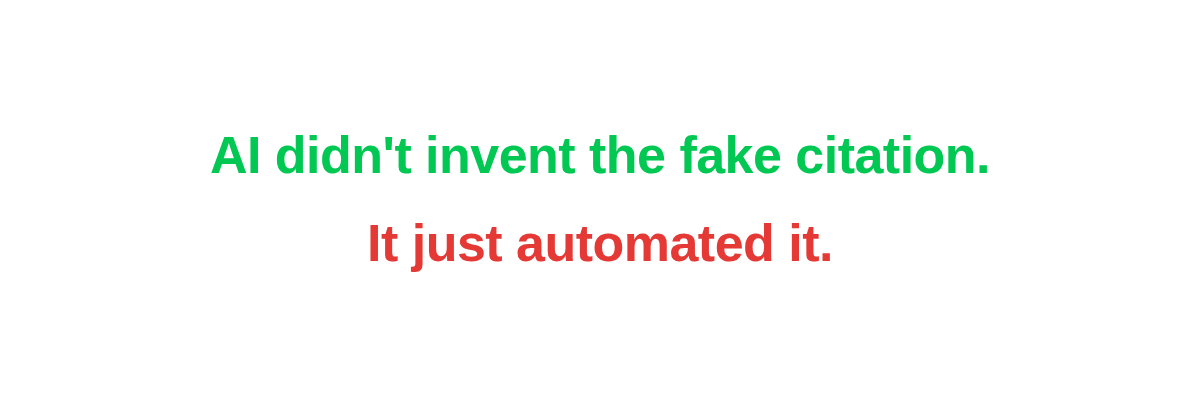
Let’s stop blaming the hallucinations and focus on the real problem:
Lawyers who don’t do their job because they are too busy, too lazy, or too incompetent.
The lawyer who cites a hallucinated AI case and the lawyer who cites a real case without reading it have committed the same ethical failure. Today, it’s usually

The hype machine is working overtime on Agentic AI. Don’t fall for it.
AI chatbots merely respond to prompts. They only give you information. AI agents like Claude Cowork or Openclaw go beyond this. They are built on large language models, but can take action on your behalf.
That sounds great, but there is a

The promise has become a mantra: AI will free lawyers from drudgery so they can focus on higher-value work. Thomas Martin, writing for the Thomson Reuters Institute, points to research from UC-Berkeley that complicates that story considerably. The study tracked what actually happens when knowledge workers adopt generative AI. They don’t work less. They
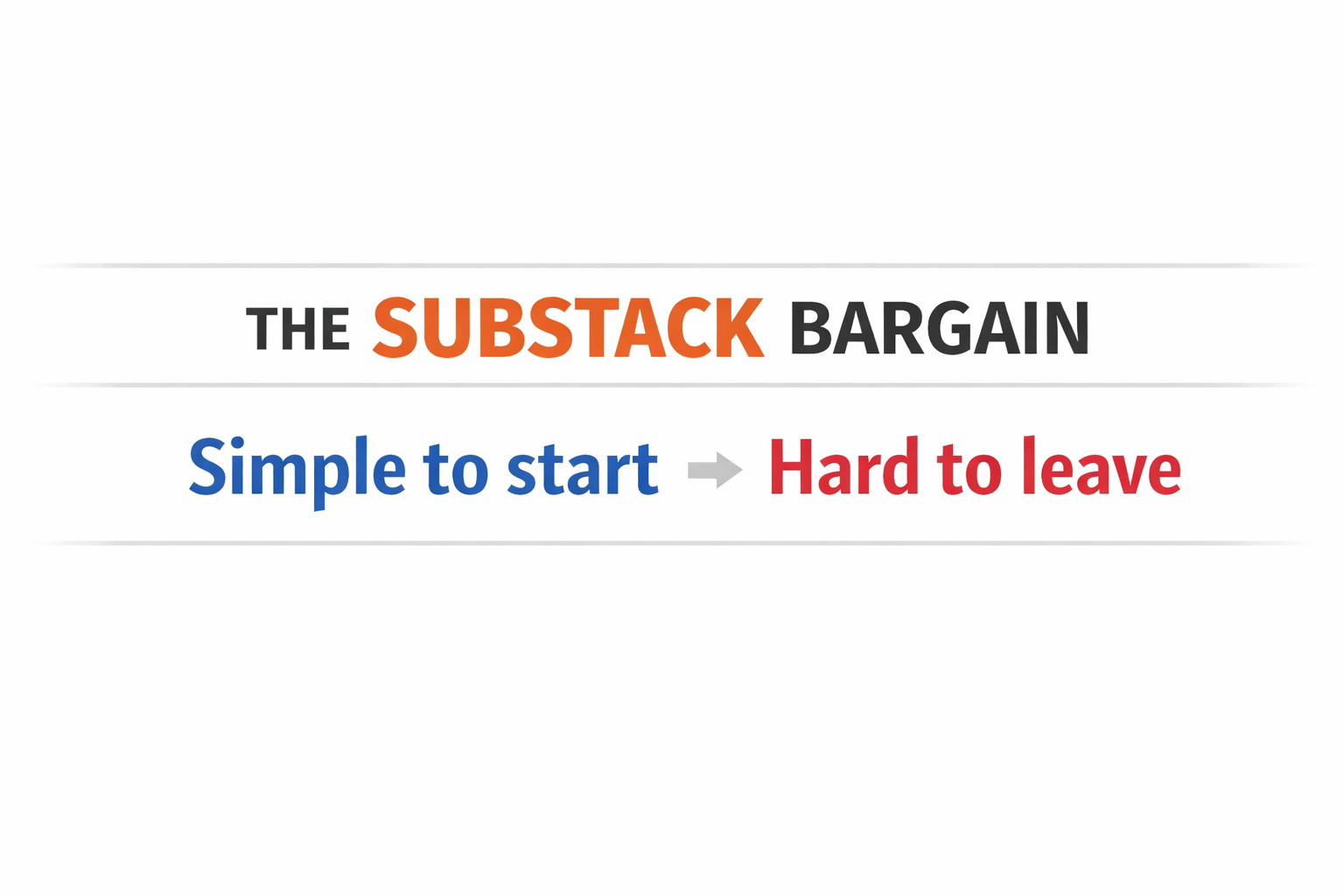
Over the past several years, platforms such as Substack have become increasingly attractive to writers seeking to establish themselves as an independent voice. The appeal is obvious. They are easy to use and can turn a writer into a publisher overnight. No web developer is required. Payment systems are integrated, and distribution is built in.
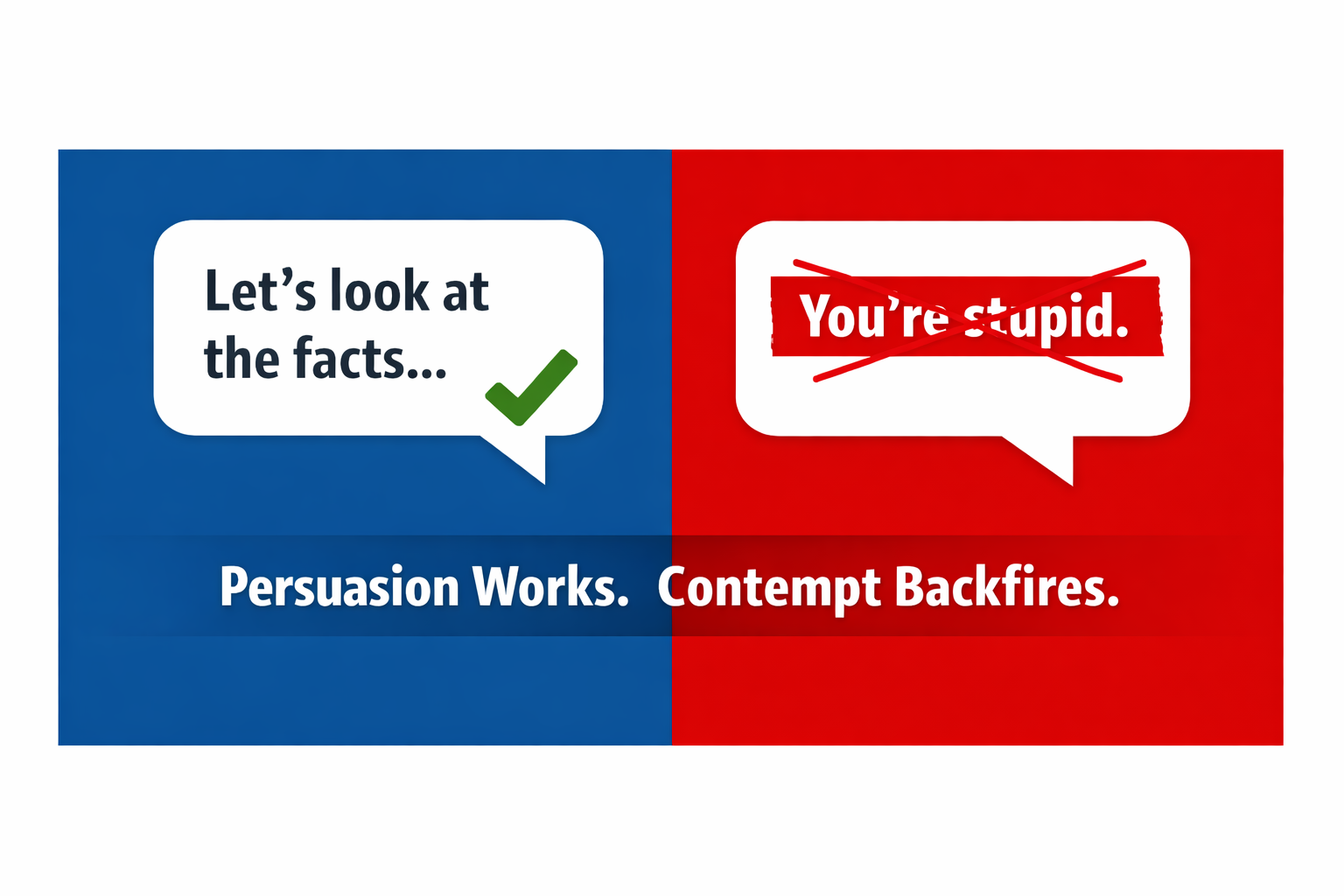
Fact-checking? Good.
Name-calling? Strategic malpractice.
The Facebook post graphic reproduced below illustrates both name-calling and effective fact-checking. If your goal is to change minds, contempt is self-sabotage.
Calling people “stupid” because they disagree with you may feel satisfying. It may earn applause from your side. But it will not persuade
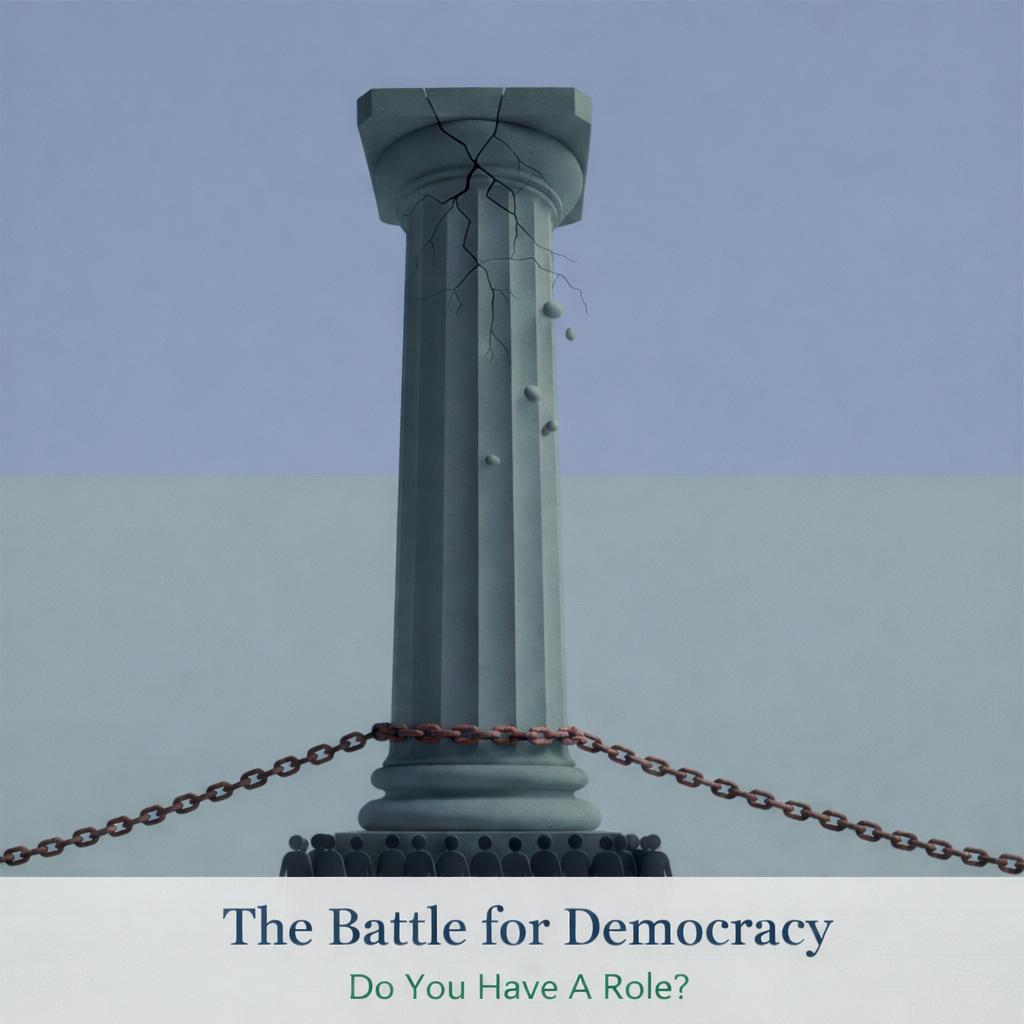
Trump is backing down—or appears to be. What’s the best response?
Recent history suggests that the retreat is tactical, not transformational.
Authoritarian movements rarely end because of a single reversal. They end because sustained, strategic pressure makes continuation impossible.
Recent state-level pullbacks may feel like victories. At best, they’re Round 1.
As journalists like Rachel